The Press
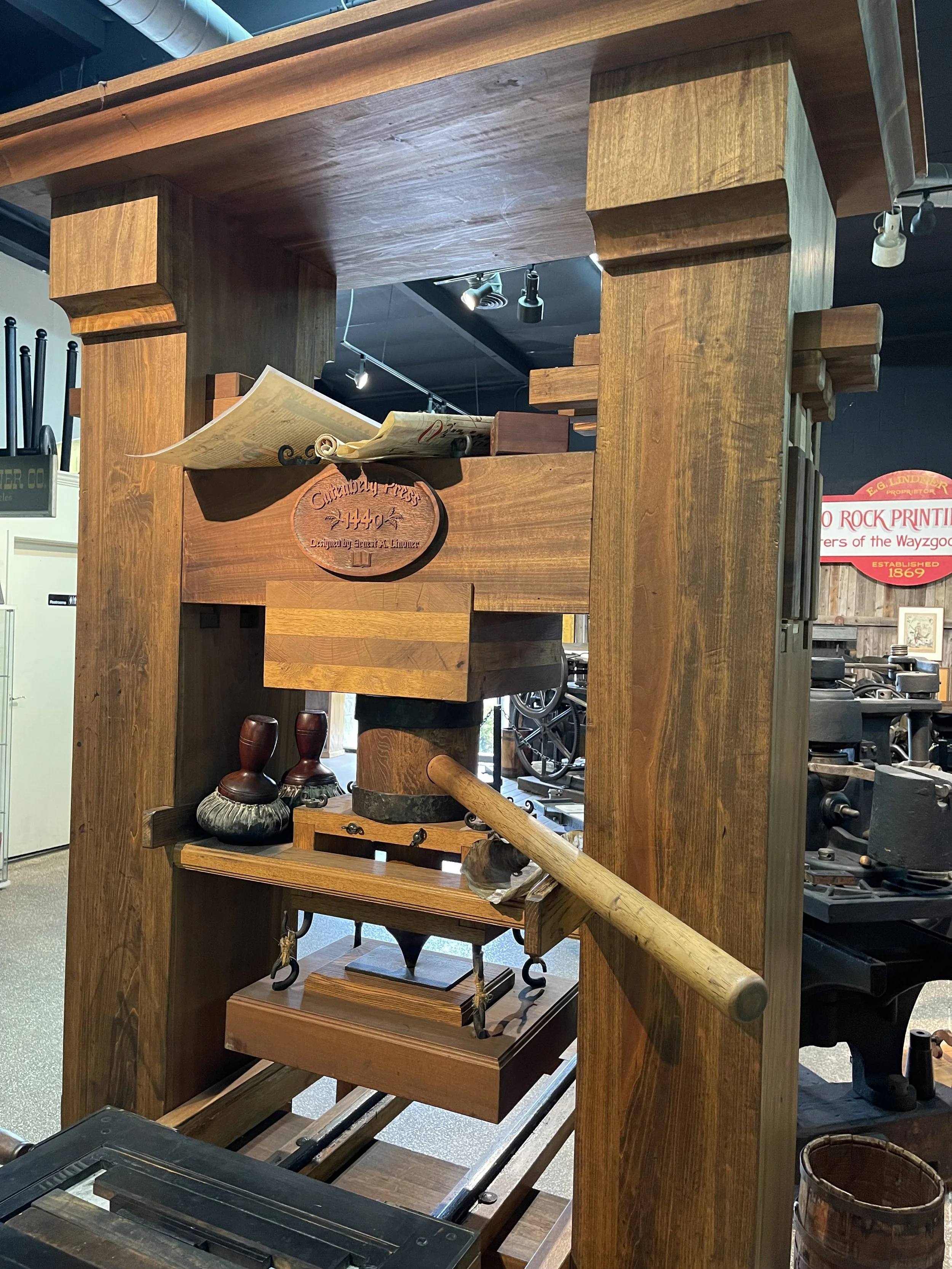
In 1450, Johannes Gutenberg built a wooden press with movable metal type — and changed the course of human history.
Carta Prima is building one again.
Not as a museum piece. As a working atelier.
The same wooden screw mechanism. The same hand-set metal type. The same slow, deliberate process that takes four times longer than any modern letterpress — because the time is part of what you are paying for.
The Gutenberg press produces a deeper impression than any modern machine. The wooden screw drives the type further into the paper surface, creating a tactile depth that is felt immediately when the piece is held. This is not a subtle difference. You can see it. You can feel it.
The Paper
Most letterpress studios buy their paper.
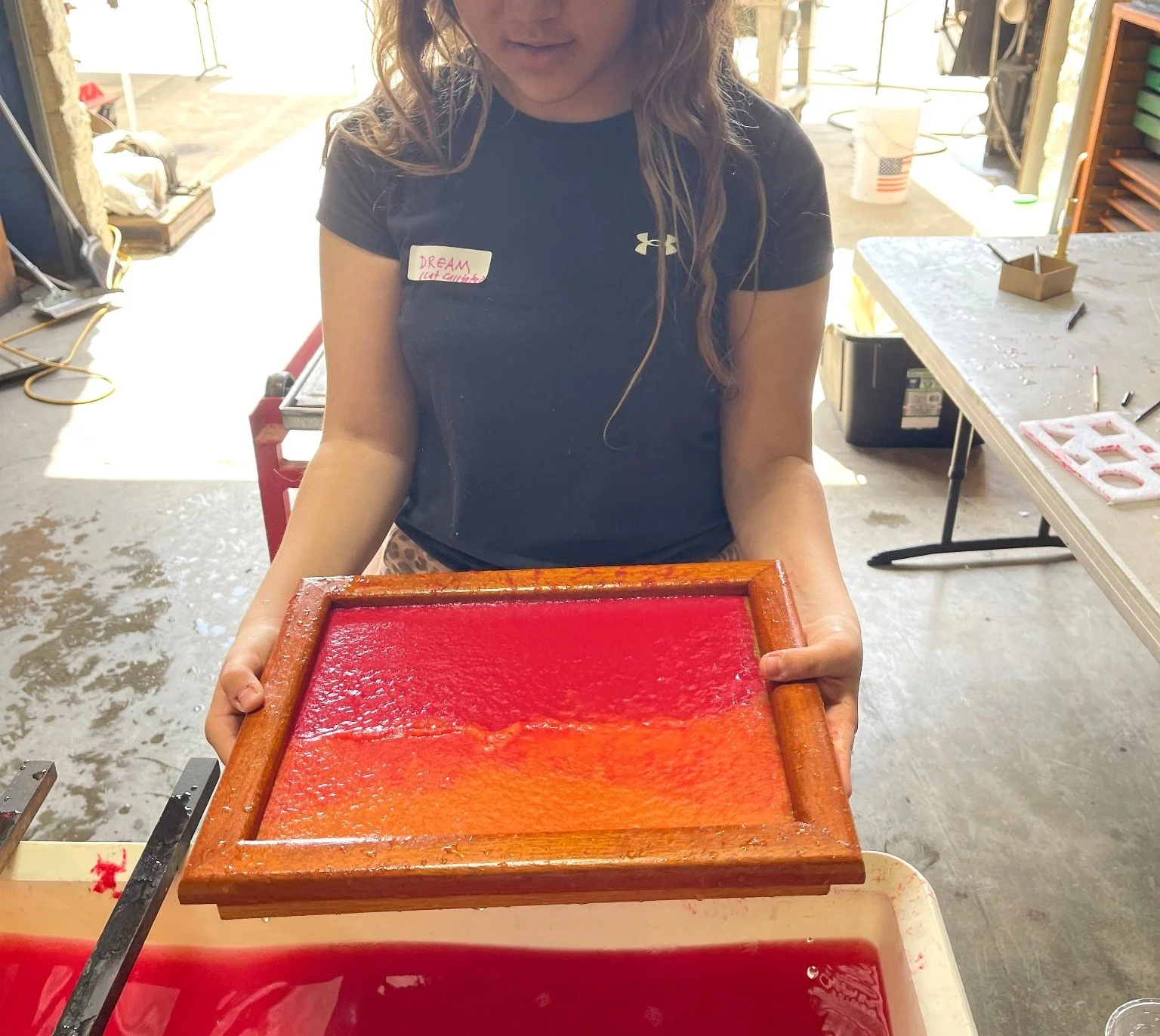
We make ours.
From cotton and linen rag — beaten by hand, formed on wooden mould and deckle frames, dried slowly. Each sheet, one of a kind.
This is not a stylistic choice. It is a material one.
Cotton rag paper contains no acids. It does not yellow. It does not become brittle. The pages of the Gutenberg Bible — printed in 1455 — remain white and intact today, more than 570 years later.
When you hold a Carta Prima document, you are holding the same material that carried the first printed words in Western history.
The difference is not something you see. It is something you feel.
The Letter
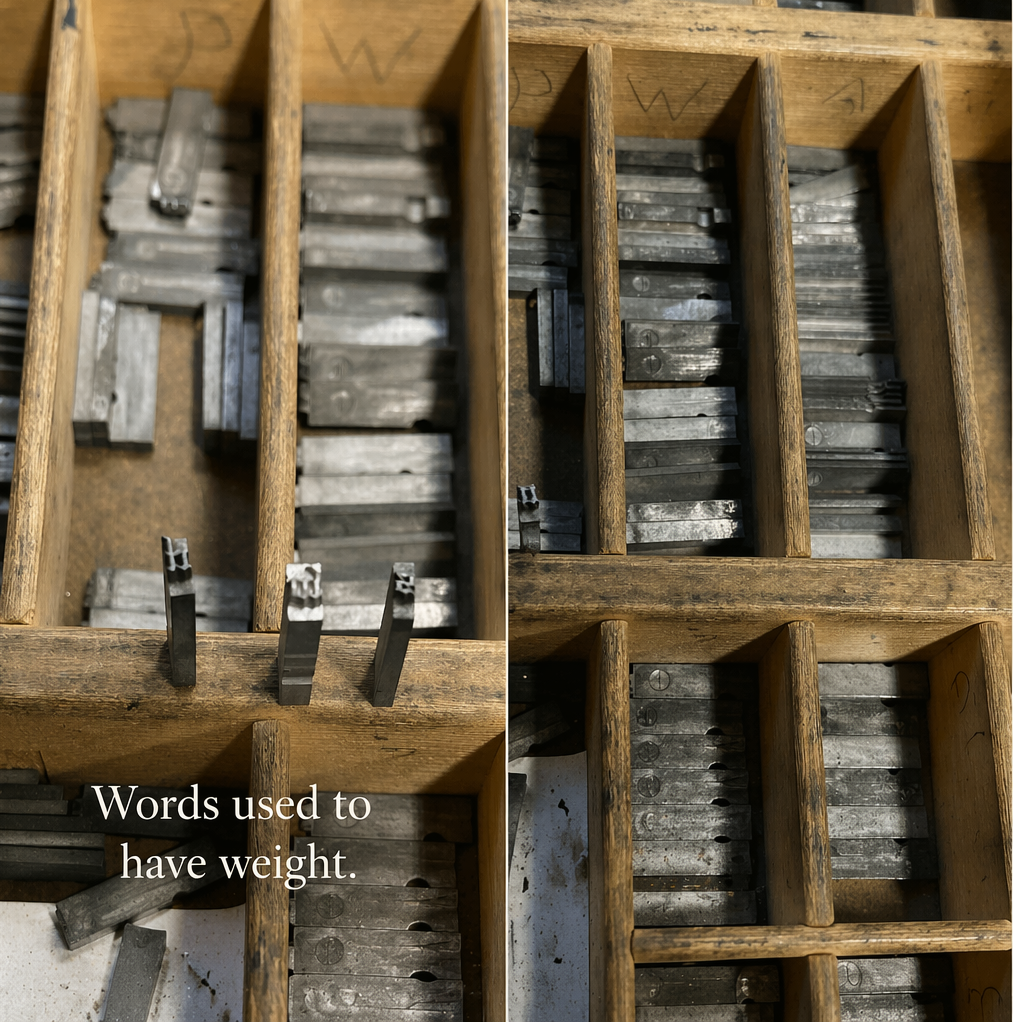
Before a word can exist, it must be built.
Each letter begins as metal — melted, cast, and cut into a form that can carry meaning.
These are not fonts. They are objects.
Each one is placed by hand, one by one, until language takes shape.
This is how a page is made. Not written — assembled.